Showing posts with label 1922-1936 Early Years. Show all posts

Monday, 10 March 2008

#009 Devon and an introduction to Cider

Clinic was still being attended, a great day being when the plaster casts were cut off, but as before the only trouble was having to learn to walk again, I was terribly upset by the thinness of my calves, so I was pleased when I was fitted with long trousers. At fourteen my schooling came to an end, I had still kept up with my cycling and had made a friend of a Stan Tysoe. He was a year older than me, as my school finished at the end of July 1936 and August Bank holiday was just after, he suggested we go on a cycle tour to Devon Somerset, (he was unfortunately killed at Heliopolis in 1941 serving in the RAF). Dad and Mum were going on holiday that same week to Cornwall, so they offered to give us a lift to Bridgwater. This was a big help. We left Long Eaton at 6am, no M5 in those days, but A38 all the way. Embracing Birmingham, Worcester Gloucester and Bristol and so on to Bridgwater. I can't remember what time we left but we arrived in Minehead around evening time, we had budgeted for Bed and Breakfast at 4/6d (22p) we found a place which also provided evening meal for 3/6 so we had that too.

We were up and away early next morning the weather being perfect, bound for Porlock and Lynemouth, on the way we were “caught” by two Manchester lads who were on a similar tour to so we joined forces. Our first obstacle was Porlock Hill, as some may know the road leaves Porlock on a gradual gradient for about a mile then turns sharp right. The gradient is about 1 in 3 immediately, as we were only on 69-inch fixed gear with one brake, we dismounted on the apex of the bend. Cars were coming up to the bend in the wrong gear and stalling, the first one after our stop asked for a push, which we gladly gave the people in the car, they then threw us their loose change out of the car windows. Naturally we stopped there most of the day earning quite a large sum each albeit a bit heavy in our saddlebags. For this reason we only made it to Lynemouth, which is only 21 miles from Minehead; we were able to join the Y.H.A it was only a shilling per night (5p) and the same for dinner and breakfast and 4p for a sheet sleeping bag. The minimum age for joining at that time was 16 but we wangled this (I was 14).

After the evening meal the Manchester lads decided to explore the town and we went along, we tried the lift from Lynemouth to Lynton the Manchurians (who were older than us at least 17) and had been at work for 3 years, asked to go in a Pub. I said I didn't drink, after all we had only just left the Band of Hope (i.e. an anti‑drink concern very prevalent pre‑war). Anyway we entered and I said I would have lemonade, no said the Manchurians “try the sweet cider its great”, thereupon I was given a pint of cider and sure enough I liked it and had two more. The time was now 9‑30 p.m. and curfew time was 10 p.m. at the hostel. Any later and you were locked out and they were very strict on this. Anyway I stood up to go and fell flat on my face, my knees buckled and I had to be carried back, a good start to my introduction to Pubs. On returning to the hostel we entered the common room where a riotous singsong was in progress till 11 p.m. ‑ then cocoa and so to bed.

The next morning after breakfast we had our duties which for us was washing up for about 90 people or it seemed like that, we left about 10 a.m. on the way to Bampton youth hostel which is in North Devon ‑ and the problem of the Quantock Hills, the problem being to us at any rate was that these hills seemed to be 4 miles up but only 1 mile down!! On arrival at the hostel the warden told us that the main hostel was full and we would have to stay in the barn. The only spaces left were top bunks - three tier models ‑ quite a job to climb up and especially difficult to negotiate if one had to go to the toilet trying not to stand on the other two occupants heads.

All went well at Bampton, we did our morning duties then packed our bags and off towards a place we had been told not to miss - Clovelly. We arrived there OK but couldn't get accommodation, someone recommended us to try Higher Clovelly (now a large Car Park). Sure enough an old couple in a terraced cottage put us up, the price being 5/6 B & B and evening meal. What a lovely place Clovelly was in those days, we spent our time rowing (we were taught sea rowing by the local fishermen who we had played dominoes with in the Pub and yes, I had grown very accustomed to the sweet cider by then). We swam and really had a good time. On the second day we were there we were negotiating the steep steps down to the beach when just in front of us a lady fell, she was obviously in pain having injured her right leg, so we bound both her legs together (a la Boy Scouts). We borrowed a stretcher from the Lifeboat station and via the donkey path we carried her up to Higher Clovelly where we rang for an ambulance. The lady was overjoyed and cordially invited us for lunch at her house in Taunton on our way home the next day. You may be wondering why we had to negotiate the donkey path in Clovelly, the reason being that since 1926 no motor vehicles were allowed down the steps.

We left Clovelly on the Friday morning arriving at Taunton at the appointed hour of l p.m., actually we had a job to find the house going by it a few times because we were not expecting a mansion with a long wooded drive up to it. However we rang the bell and a uniformed butler opened the door and asked our business. We informed him whereupon he said we were expected, but would we change our clothes, he was really put out when we informed him that what we had on was all we had. The lady was really a Lady and made us feel at home, we had never seen so many knives and forks but we got through OK

After leaving Taunton we had a long wet ride to Batheaston youth hostel. One of the Manchurians fell in the then tramlines in Bath. The next day Saturday, we were on the road to Worcester we stayed at Holt Mill youth hostel, here we parted our ways with the Manchester lads ‑ we going on the A38 – and we were all miserable to part , but strangely enough we never corresponded with them. Stan and I had a terrible ride home in rain and wind, but the sense of achievement was really good, we had done it under our own power.

#008 Back to Bretby

Also pre-war and with my dad’s help, 5 of us bought a brand new bell tent for £5, each of us paying my Dad a shilling a week for it. Dad took the tent and all the gear to Pear Tree farm at Kinoulton in Nottinghamshire. We would cycle there most weekends, we bought a Primus stove and did all our own cooking buying bacon and eggs from the farm. The farm owned a fine tennis court and with their permission we marked it out having already mowed the grass, then we paid to play on the court. We had a knock out tournament most weeks. We also had a ridgepole tent. Two of the lads slept in these using sack bags stuffed with hay as a mattress. On one particular Saturday Sir Jesse Boots (Boots the Chemist) daughter came with her boy friend, they had all the best camping gear, we got on quite well with them and they copied us by stuffing some sack bags with hay for a mattress. On the same evening we walked along the canal tow path to the next village Hickling, and straight in the pub near the road bridge, here we had quite a few pints of beer and also played dominoes with the locals a good night being had by all.

On our return to the farm we were passing the Boots camp, their tent had been flattened - the cattle had ransacked their tent to get at the hay. We thought in our inebriated state that this was a huge joke little knowing that our tent had had the same treatment. The farmer lent us tarpaulins so we were able to effect good repairs. The rich Boots people could afford to stay at the farmhouse. We camped here most weekends but we had to take the tent down, the Army objecting to the camp at the outbreak of war. They were frightened of air attacks by the Luftwaffe, what a joke.

February 1934 saw me back at Bretby Hall for further operations to my feet. This time the stay was only six months. In the hospital were quite a few lads who were there in 1929/30, they were delighted to see me and wanted to know all the news of “the outside world”. The same food was being served and the same games were being played in the ward, it was as though I had not been away, school was the same. One improvement had been made ‑ a tuck shop had been opened. We were then able to spend our meagre pocket money on sweets of our own choice. Mr Heather still appeared with his goodies and still held the Sunday singsong ‑ it appeared louder than ever to me. The day of joyous home return soon came this time, it was sad goodbyes to all my comrades in the hospital, some of whom were destined to be there for many years hence. 1 was to return to this hospital for a knee operation 40 years later.

Back home once more, I was to see the shop's new extension. A new shop front had been fitted; motorcycles were now being sold, ie Triumph, B.S.A., Excelsior and New Imperial. A larger workshop had also been built by George Leivers, later to be a prominent builder in the locality under the name of Brown & Leivers. Reedman’s Builders of Sawley did the shop alteration and fittings.

Return to school was again more difficult; I was again put in a lower class. Exams were on at the time, and next to me sat a boy from Armstrong's travelling Fun Fair who were in the town. The children from the fun fair had to attend our school, history was the exam and poor Gordon was clueless. I did the exam for him, he finished top, and there was an inquest and a reprimand for me. My brother was in the same class, having caught me up due to my hospitalisation. I finished 3rd in class so was hoping to go up to the next class, however I did not go up as students who were due for their scholarship exams had preference. So, I had to wait a further six months before I made it to the higher grade. My brother Ernie won a scholarship to the Grammar School the following year. I had by this time caught him up, my stay in hospital thwarted my taking the test for Grammar School.

#007 Monsal Dale and Blackpool

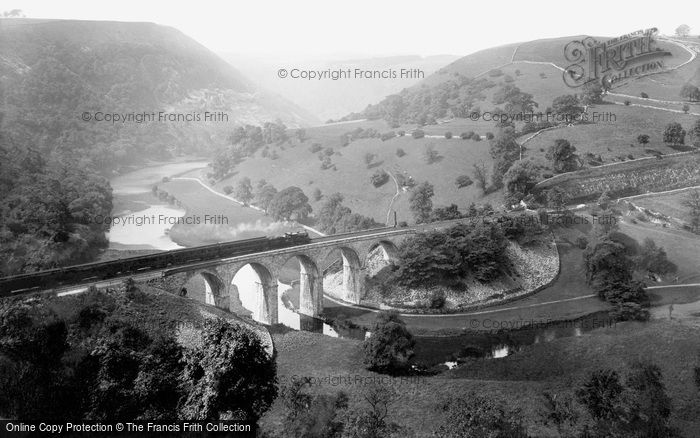
Later on that year in September, Dad and I went on our bikes to Monsal Dale for a week’s holiday. Dad had an uncle who farmed at Monsal Head and Great Longstone. What a thrill it was to bike 40 miles with Dad who obviously had to push me some of the way. We had a marvellous week there culminating at the weekend with a trip to Blackpool Illuminations, the trip was organised by Great Longstone choir (it was their annual outing), two people had dropped out so Dad and I were invited to fill be vacant places. We caught the train at Great Longstone station (closed by Dr Beeching), walking the 4 miles from Monsal Head, we changed trains at Manchester (as far as I know this is now the G Max exhibition centre). As we neared Blackpool, dad asked me to look out of the window to see Blackpool Tower, this tower had the impression of moving from side to side of the carriage as the track snaked.

Blackpool was a real treat for me, every tram and every building was lit up ‑ even the Tower had a searchlight on top. We eventually caught the train back home, unfortunately the train only stopped at Monsal Dale station so it was a long climb to Monsal Head.

We left there on Monday and biked over to Sheffield, where my dad’s brother Sam entertained us. On the following day we had a tour round the famous Vickers Steel works at Attercliffe ‑ seeing all the drop forging plants and the foundry filled me with wonder. During the time we were at Sheffield, or actually the suburb of Firth Park, my cousin and I walked through Pitsmoor and then climbed up Wincobank Hill, quite a good view of Sheffield could be obtained from there. (It has now been built over). The real reason for our wanting to top this view point, was to see the World War I sites for anti aircraft gun and searchlight posts, parts of which were still there, for us 7 & 9 year old it was quite something. Uncle Norman from Long Eaton who was the proud owner of an Austin Seven collected dad and me from Firth Park, the bikes tied to the rear luggage rack.

On pre-war visits to my cousins at Firth Park in Sheffield we would visit Owlerton Stadium where Sheffield Blue Socks played Baseball, this game was very popular around 1936. On one particular night Boston Red Sox from America where playing Sheffield Blue Socks and starring in the Boston team was the legendary figure of “Babe” Ruth the finest player the world had ever seen. He was at the end of his career reduced to playing demonstration games. We were honoured to see him play he ran two “home” runs that night the crowd where ecstatic.

On future visits to our Uncle at Monsal Head we marked a diamond out on their large lawn then played with a broom handle as bat and a tennis ball. My two brothers and I would cycle up to Monsal Head on most Easter and Whit bank holidays our cousin Maurice would meet us there having cycled over from Sheffield. How my Aunt was able to feed us, I’ll never know as she had no inkling we were coming, we would stop at least three days and all their family i.e. two lads and two girls played baseball with us a great time was had by all.

#006 Life at home

Home, after hospital life, seemed very small. The shop was busy, the bell going throughout the day. Often times my dad was called from the workshop at the rear of the premises to deal with an awkward problem, this necessitated him coming through the living room to shouts of “wipe your feet” from my mum!. Starting back to school was always difficult especially if half way through a term, they also put me in a class lower than my age, owing to my being absent ‑ seemingly not to know about hospital school. In summer we learnt to swim at Derby Road baths, these baths were unfortunately closed some little time later due to an epidemic of some kind. We therefore swam in the Erewash canal, which was only a hundred yards from our home.

We built a raft from scrap wood from the local ballast hole, this ballast hole had been formed when the Midland Railway had been laid some 30 years previous, it had filled with water and the Railway Co. was tipping all waste in to it to infill it. The new local policeman hauled my brothers before the court and, confiscating the raft, he took it on a handcart to the court. The Magistrate who was a local man, had played on this ballast hole years before us, and when the case came up, he asked the policeman where he had collected the wood. He replied that the 'raft' had been brought from Tamworth Road bridge, where upon the magistrate observed that the policeman had taken the 'raft' much further away from the site than we would ever have done. Case dismissed. A diving board was built, we obtained two scrap front springing from the local Magnet Garage (still in business), fitted these to a plank and fabricated a sprung diving board, this site is still there situated near the Tamworth Road canal bridge, part of the site is now a Sea scouts headquarters.

In 1930 or thereabouts, Long Eaton staged a week long Carnival. The proceeds those days went to the local hospitals, everyone dressed up and all the streets were decorated, including lampposts and telegraph poles. There was a prize for the best decorated street which was won if my memory is correct by Queen St. At the rear of the fire station they ran a swimming contest on the canal. Two long boats were anchored at 100 yards apart with distances marked in between, the events were a great success. The final Saturday was given over to a parade, these were miles long, at least 50 carnival bands and all the local trades on long vehicles with carnival Queen and her attendants leading. The carnival raised thousands of pounds for the local hospitals ‑ my own Bretby included.

This carnival eventually advanced so successfully that it was extended right up to 1938 to 14 days. The last Saturday of the carnival was brilliant, a big fun fair with all the latest rides and side-shows, such as boxing booths, almost as good as Nottingham Goose Fair. A sports meeting was also held on West Park where cycling and athletics were on show. The prizes ‑ being very good ‑ brought all the top cyclists and athletes to the town, later at night a big firework display was held. At midnight a huge crowd on the market place took part in community singing led by the”Daily Mail” red radio van, This van led all the parades with its tannoy system, bringing everyone out in force. Meanwhile my legs were getting much stronger, due mainly to cycling.

My Dad had been ill in 1931 due to pressure of work, but business was good so he was able to set on an assistant. At last he could take a holiday. Apart from odd days, this was his first long break since 1924, I well remember one of these days, it would be an Easter Sunday, Dad took Ernie on his bike, Mum had Alan and I rode my own machine. We went over Sawley Bridges then turned left down Whites Lane which, after opening several gates comes out at Kegworth, some 5 miles distance. Turning left at Kegworth, we travelled over the river Soar, past the high board causeway (built for cyclists and walkers when the Soar flooded). We had egg & chips at the Railway Inn and then set off through Kingston, Gotham & Clifton to arrive in Nottingham. We parked our bikes at the rear of the Ritz cinema (now the Odeon) and went in. The thrill of seeing Jack Hellyer and his organ rising from the floor was real magic for us, the film was titled "Easter Parade". This was very appropriate. We came out of the cinema, collected out bikes and sailed home with a back wind. There was no thought of our bikes being stolen. What pleasure we had from small things those days and how honest people were then.

#005 Christmas and homeward bound

The Sunday before Christmas Mr Heather came round with a list to ask us what we would like for Christmas, I put down a farmyard, sure enough Mr Heather came dressed as Santa delivering presents for everyone (I was to learn many years later how he did this). Turkey was enjoyed by all with a doctor carving, A large Christmas pudding was ceromonously wheeled in ‑ it was a terrific day. On Boxing day we were all moved out of our ward to make way for the nurses party, it was due to finish early the following morning, we were wide awake with the noise from the band and after the do was over, ‘up patients’ raided the place for the leftover food and drink. We were half drunk in a few hours, what a time we had. All the people in that ward 5 and all other wards swore terrible. One particular day we were hard in conversation, every other word a b or f or worse, what we had not realised was that just above us was a Sisters bedroom. The sister in question worked days but she had changed one shift to night duty and we had woken her, she came down on us like a ton of bricks! The end result was that three of us were put in ‘quarantine’ under the stairs ‑ no lights and bare food for three days and nights.

On winter evenings we held relay races in the ward, the long centre table was removed and then we commenced, all events were on the floor ie backward and forward crab, rabbit jumps. And the best was crab football, I was to incorporate these relays years later when I ran a gymnasium. We were all mad keen on aeroplanes in those days drawing Spads, Bristol fighters and Fokker three wing planes. One of the boys had a ‘frog plane kit’ brought him powered by elastic, we all had a hand in building it then came the great day for the launch. The elastic was wound, the aerolons were adjusted and off it went inside the ward of course, everything was great and it did a magnificent three-point landing on the centre table. The only thing wrong was that it didn’t stop and wiped all the vases of flowers off the table. Water, flowers everywhere, the plane was confiscated never to be seen again! Also in the winter we had slide cinematography shows, the ones remembered most where Scott of the Antarctic, Nanook of the North and Rin Tin Tin. These were all silent films from the original filmmakers in the Scott South Pole expedition. Another film that comes to mind was one of that great explorer Shackleton (I have just ordered a new book from our local library by Roland Hunniford about Shackleton). Also read by most of us in the ward was a book by Cherry Orchard “THE WORST JOURNEY IN THE WORLD”. I have read this book many times since then.

After 18 months in hospital, the great day dawned when I returned home, still in plaster, but walking OK in my new boots. Goodbyes and best wishes were said to mates, several of these were still there on my return for two more ops some three years later. Dad had contacted another Long Eaton cycle dealer friend, a Mr Russell. He had the famous Raleigh agency, he also had a car and very kindly brought me home.

I had only seen my two brothers once while in hospital as no visitors under fourteen years of age were allowed, (slightly different from today's rules). The only time I had seen them was when a walking plaster and boots had been fitted, and I was able to walk over the grass in front of Ward 4 to the iron fence near the caves and lakes at the bottom. We were not allowed over this fence so all one could do was talk through it.

The trip home via Willington & Repton was like a window on another world, after the restrictive view from the hospital windows. I arrived home on a Saturday afternoon to find my brothers ‑ with a friend ‑ had gone to the local Co‑op to fetch some extra groceries, during the journey home they decided to use the towpath along side the canal. Somewhere along the way, relationships deteriorated and the three of them were involved in an argument. The friend promptly threw all the tinned food in the canal! ‑ On their return home all hell let loose, my mum going hairless, eventually calm reigned and my dad by some means or other managed to retrieve the tins.

#004 Life in Bretby

Earlier on that year, work had commenced on a new hospital wing, which were to be wards 9 & 10. F. Perks & Son, a firm from my own town of Long Eaton had the contract. Just before work commenced on this project we had got very keen on football, each drawing a team from the first division of the Football league. Arsenal was my choice ‑ they were league leaders at the time. Some bright spark suggested we get a ball and challenge wards 6 ‑7 ‑ 8 to a match. At that time, the maker of OXO cubes where running a competition. If you saved fifty cube boxes and sent with these a 2s 6p Postal Order you received a football. We went in the kitchens and informed the staff of this and they duly supplied the empty boxes. We then had to find the 2/6 for the PO, quite a large sum for us, it was eventually saved and a kind nurse procured the PO and some time later the ball arrived. Two teams where picked, the sights that were behold for the teams where unbelievable, three ‘up patients’ played forward, patients with one leg iron played in defence and goalkeepers were patients with two leg irons, who lay across the goal mouth. All patients were wheeled on to the front of ward 5, the match being played on the lawn in front. The game was a great success and more were played through that great summer.

As was written previously, F Perks & Son where building wards 9 & 10, at their lunch break they borrowed our football, much to our irritation the ball was burst. The following week they bought us a new one far superior to our OXO model. We were wheeled outside in all weathers, in summer ‑ irrespective of the weather ‑ we only wore small trunks, all the bedclothes being taken from us. In winter the only time we were brought indoors was if it rained, snow was no problem, we were in it. Those of us with bed cages were lucky, because you could go underneath this. My dad bought me a bike front lamp which I was then able to use to read under the clothes. We all had frost bitten hands, even though we used old socks for gloves and 1929 was an abnormally bad winter!

During the day we made our own enjoyment, submarines and battleships was played across the ward, we also arranged domino tournaments and of course, card games. Scouts were organised that summer by a Scoutmaster from Burton on Trent. We were given shirts, scarves and hats and we all passed our tender foot badges then took higher badges. We had our own War Cry –

‑B‑R‑E‑T‑B‑Y Bretby is the place

Where we make men.

There are no flies on us,

There may be flies on some of you guys

But their ain't no flies on us‑

A boxing tournament was arranged one evening, one of the boy's parents brought gloves, everyone took part in this knock out competition, even the lads on tip-up beds, they had their shoulder restraining straps removed to enable them to have more room. I was beaten senseless by one of these bedridden lads.

The food whilst being good for us had no variety, every week was the same. We had roast beef and Yorkshire pudding on Sunday, on Monday we had cold beef, Tuesday beef or mutton, Wednesday was stew day, Thursday hash, Friday fish, Saturday fruit and every day rice or sago pudding, brought to us in white pails. Breakfast was bread and honey or Lyle’s golden syrup, boiled eggs also appeared from time to time. A cooked breakfast of bacon & egg was the treat the day after any operation. We had plenty to drink ie cocoa, Horlicks, (which is still a favourite drink) and milk. Plenty of fruit was eaten at tea time so, all in all, good plain food ‑ which all had to be eaten, anything that was left had to be finished at the next meal ‑ and the next ‑ till all had gone. School was every day, same hours as at home. History was my favourite subject (it still is); personally a lot of reading was done.

After operations you had your first plaster cast removed then out came stitches, then you were fitted with a walking plaster and measured for large boots. When the boots arrived you were able to get up but what a shock because you had to learn to walk again, holding on to beds and falling over. But it was a very good feeling after (for me) 12 months in bed - I was lucky, some patients were still bed ridden when I returned some 4 years later.

One particular happening that summer I remember well. The Airships R 101, R 100 & R3 4 flew over, what a great day that was for us, bearing in mind that if a car or lorry appeared down the drive we all crowded round to catch a glimpse of these (to us) mechanical marvels. Christmas was a great time for us. During my childhood spell at Bretby, we had a regular visitor call on us, his name was Mr Heather. He brought everyone a bag of sweets, and he also held a religious service in the afternoon. People in Burton 3 miles away could hear us sing, especially the Hymn

'Pull for the shore, sailor, pull for the shore,

Heed not the tiring wind but bend to the oar

Safe in the lifeboat, sailor, safe evermore,

Glory, glory hallelujah, pull for the shore.

My dad came to see me every other Sunday and he had a word for all the other lads (he could not come on Saturday because of the shop and he came by bike in all weathers, a 50 mile round trip. There was a period in 1929 when we had no visitors for some weeks due to a Diphtheria epidemic; Thank God this has been eradicated now. Early in 1930, February comes to mind, the wireless loudspeaker in our ward had been left on, suddenly an emergency announcement came through, the newscaster announcing that the RI01 had crashed in France, we were all saddened as we had seen this ship just prior.

#003 Bretby Hall

At this time I was attending a new clinic in Waverley Street. As my feet did not improve it was suggested to send me to Bretby Hall Orthopaedic Hospital, this had recently opened (1929), and my mother and I left by train, again from Sawley Junction. Just before entering Derby Station I was rewarded with the amazing sight of several steam engines. This was the start of my life long love of steam.

Next stop was Burton where we were again met by an ambulance. Bretby is about thee miles along the Ashby Road, at the gatehouse or lodge you turn left, then along a long drive to arrive at Bretby Hall. I then went through the usual rigmarole of goodbyes then a bath and so to the ward. As the children's ward was full, I was put in to Ward 5, which at that time was for 15 year olds upwards. I was 7, I seemed to get along OK with the rest of the patients, most of whom where suffering from TB which was quite prevalent at that time. Quite a few were on ‘tip up’ beds i.e. a fracture board was reared up at 45 degrees. Tied to the top of the high bed rail, the TB. infected leg was attached to a leg weight to try and straighten it, others with TB spines where on a Spiker that necessitated years in this prone position, the lads on 'tip up' beds were also there many years.

Visitors were only allowed once a fortnight and they had to walk the mile from the lodge gate because the bus did not come up the drive. A contest was therefore arranged, first prize being awarded for the relatives who were leaders through the gate to the hospital. All food brought was shared equally with all other patents, this worked well due to some patients having no visitors at all. I was there for bonfire night 1929, we all bought fireworks and these were pooled and ‘up patients’ were in charge of the display. Things seem to be going well until Wheetcroft, who had TB glands and so could walk about and help the nurses, dropped a lighted match in the whole box. Rockets were going in all directions, jumping jacks were all over the place ‑ it was the best firework display we had ever seen, it lasted fully five minutes. “Light another like that” everyone shouted, but that was the lot, the pooled fireworks of six wards had gone off in one foul swoop. Wheetcroft never lived that episode down.

#002 Coleshill Hospital

Meanwhile I was still attending the Cripples Guild - halfway up the hill on Oxford Street, Nottingham. It was an adventure then to go by Bartons red buses to Nottingham, the route took us by Chilwell Ordnance Depot. I was intrigued to see all the railway wagons had W.D. on the side (i.e., War Department) and after seeing these every week I asked where the P.D, ie. Peace Department wagons were. Ah, the innocence of childhood -. After several visits to the Cripples Guild it was decided to fit me with knee length callipers and so I was sent to Coleshill Hospital. This entailed a journey by train which was quite an adventure for me, I remember going to Sawley Junction station for the train, we had to change at Derby which necessitated going over the footbridge. As I couldn't walk well they allowed us to go on an underground lift, which was another adventure as I was given a ride on a new type electric trolley.

We eventually arrived at Coleshill Station where we were met by an ambulance, which took us to the hospital. Goodbyes were said to my mother and grandmother very tearfully as I remember. Then into a big bath where I was scrubbed with carbolic soap, coming out of the bath red as a beetroot and then put to bed. This hospital was run by nuns (its still there and is still run by nuns), there were several other patients in the ward, all older than me ‑ I was five at this time ‑ they told me that the ward was haunted and at night a ghost would appear. Sure enough after lights, out a ghostly white figure appeared, I was scared out of my wits and shot under the bed clothes to find out much later the next day that the figure was the night sister wearing a white habit and doing her rounds. I don't remember my operations but remember the two ‘knee length’ plaster casts that were put on. We had school lessons in hospital but after six months ‑ on my return to Sawley Road School ‑ I was well behind and it took me a year to catch up.

1929 saw me in the big school, Form One. Mrs Thompson was the teacher; she was very good for me as I finished 3rd in the class and top in the August exams. However, after the school holidays I was again in hospital but just prior to this dad had supplied me with a brand new Standard K bicycle. I was able to use this as transport to and from school, all other pupils had to walk, my brother Ernie was at school by now and I, on one particular day picked him up for a ride home on my bike crossbar. All went well until passing Wyvern Avenue, a dog ran out at us snapping at our legs, we swerved to miss the dog whereupon my brother put his foot in the front wheel and over the top we went, our heads where badly cut and bruised. The next day we were brought before the whole school assembly and severely reprimanded by the headmaster Mr Gerald Oldam, and I was forbidden to give any more joy rides.

#001 In the beginning...

1922 dawned as the birth of the British Broadcasting Corporation, its original name or Call sign being known as 2LO. On July 9th of the same year at Mount Pleasant, Castle Donington I was born. My father, Ernest Buttler had recently been demobbed from the Royal Garrison Artillery after serving in Northern France around Arras and Bapuame area. He had been an Artificer on Howitzers. 38 years later I would visit these battlefields on my way to Rome for the 1960 Olympic Games.


My mother Kathleen had been working at the Royal Ordinance Depot at Chilwell where she narrowly escaped an explosion which happened there in 1917. My father worked with his father at 35, Main St., Long Eaton ‑ making at that time pedal cycles named the “Eaton Cycle”. This cycle was made with Reynolds Tubing with Brampton fittings, BSA chainwheels of 64 teeth, fitted with Eadie Coaster rear back pedal brake hub and 2 speed gears, some others were fitted with K type Sturmey Archer 3 speed gears. The shop also sold parts and accessories.

The post-Great War years saw the family business prospering. Only a few hundred yards from the shop, and with a sizeable work force, was the great wagon works of S. J. Clay & Sons. The lace trade in Long Eaton was also expanding and with the London & Midland railways Toton Sidings not far away, the business appeared to have bright future.

However to get back to Castle Donington, I was born with clubfeet and at six weeks old was taken to Derby Royal Infirmary where the necessary surgery was carried out. Unfortunately this didn't turn out to be successful as will appear later. My dad was able to rent a house at Long Eaton ‑ 72 Tamworth Road and this obviously enabled him to discontinue his 6 mile journey by bike to and from Castle Donington. 1924 was a momentous year for my hard working parents, May of that year saw the arrival of my brother Ernest, and catastrophe happened when my dad was sacked by his father - the dispute I believe over bringing motorcycles in to the business, my father had a motor cycle at this time. Anyway nothing daunted dad borrowed £20 from my mum's Aunt Lucy, changed the front room of 72, Tamworth Road in to a shop and built a shed at the rear for repairs. He was good with wireless and he built quite a few, the cabinets being built by a master carpenter who lived across the road. Until Cosser and Echo etc, commenced manufacture they had quite a good business going; the wireless mostly made after the shop was closed. My dad was also good at photography and had a plate type camera ‑ unfortunately none of the results have survived.

12 months later the shop had become established and in November came the arrival of my brother Alan. With 3 boys and a shop to look after it must have been a relief to my mum when I started school in the Autumn of 1926. As I was still walking badly, my dad made me a three-wheeler bike with 24” wheels. Travel to school was no problem now of course, and after school when playing in Myrtle Avenue, then a Breedon stone road, I took at least four more kids on the bike and on one such escapade the back wheels collapsed.